
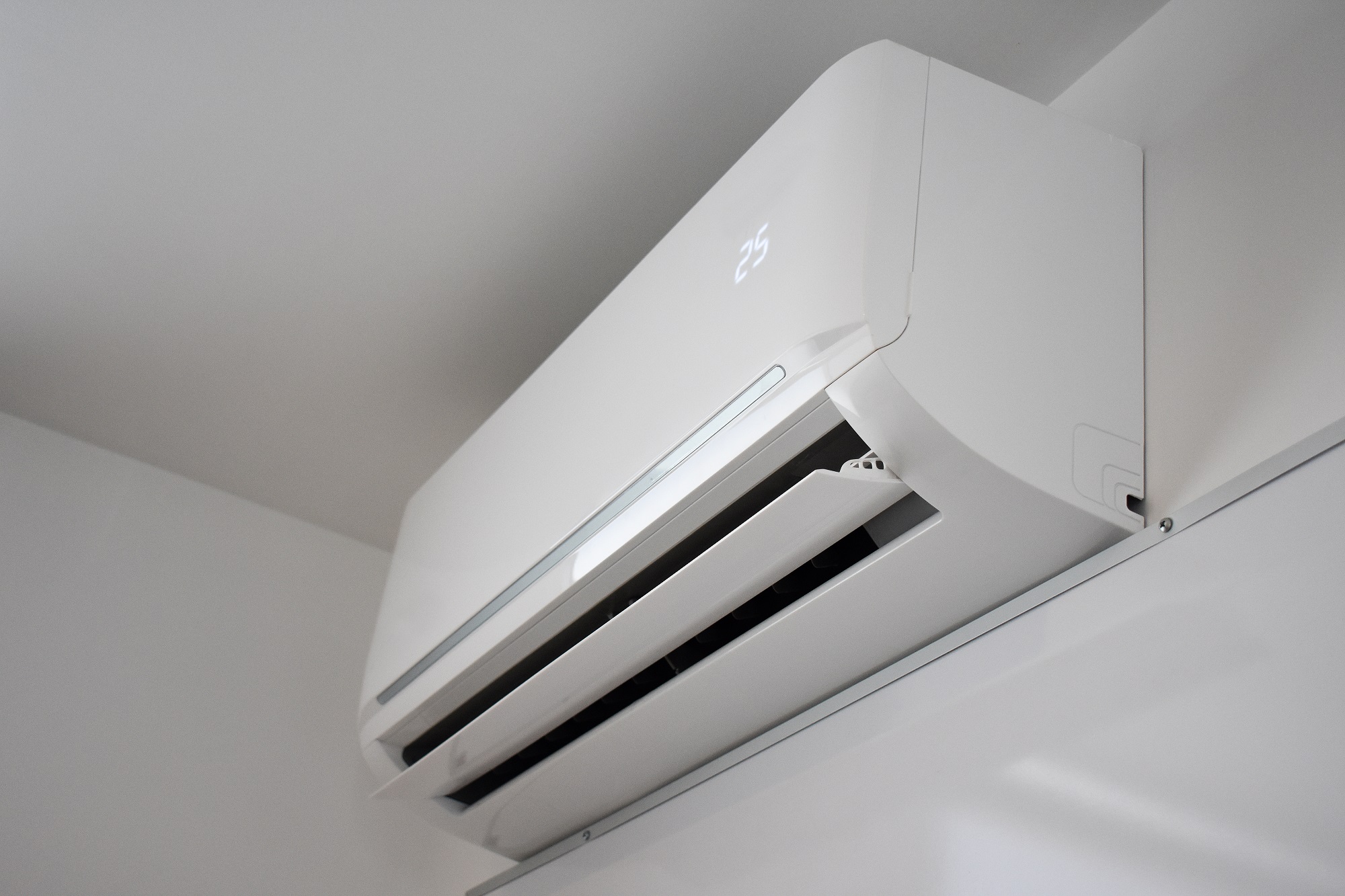
When a Small Ductless System Starts Working Harder, the Clues May Be Hidden Inside
A ductless unit can look clean from across the room while dust, residue and moisture-related buildup quietly interfere with its performance. For homeowners searching for mini split cleaning in Portland OR, understanding what happens around the evaporator coil, blower wheel and condensate drain can explain why a system sometimes loses cooling efficiency without an obvious breakdown.
Mini split cleaning evaluates evaporator coil fouling, blower wheel buildup and condensate drainage to identify restrictions that reduce airflow and cooling efficiency. By cleaning accessible components and checking drainage patterns, technicians can help restore system performance while identifying conditions that may require additional maintenance or repair.
The challenge is that this buildup often develops gradually, making it easy to overlook until comfort or airflow changes. A homeowner may notice reduced airflow, longer cooling cycles, uneven temperatures or a musty odor when the indoor unit operates.
Why Does a Clean-Looking Mini Split Still Lose Efficiency?
A mini split system delivers conditioned air through a compact indoor assembly rather than a conventional ductwork. Inside that assembly, the evaporator coil absorbs heat, the blower fan moves air across the coil, and the drain pan collects moisture produced during cooling. When dust or residue accumulates on these components, the system may gradually move less air even though the thermostat still appears to operate normally.
That matters across the Portland metro area, where ductless systems are used in additions, bedrooms, remodeled spaces and homes with different heating and cooling needs. Single-zone mini-splits, ceiling-cassette mini-splits, and mini-split heat pumps all depend on clean airflow paths and proper drainage. People Also Ask: Can a dirty mini-split coil affect indoor air quality? It can contribute to dust and debris accumulation inside the indoor unit, although cleaning shouldn’t be presented as a guaranteed treatment for indoor air quality concerns.
How Can Cleaning Restore Airflow Without Guessing?
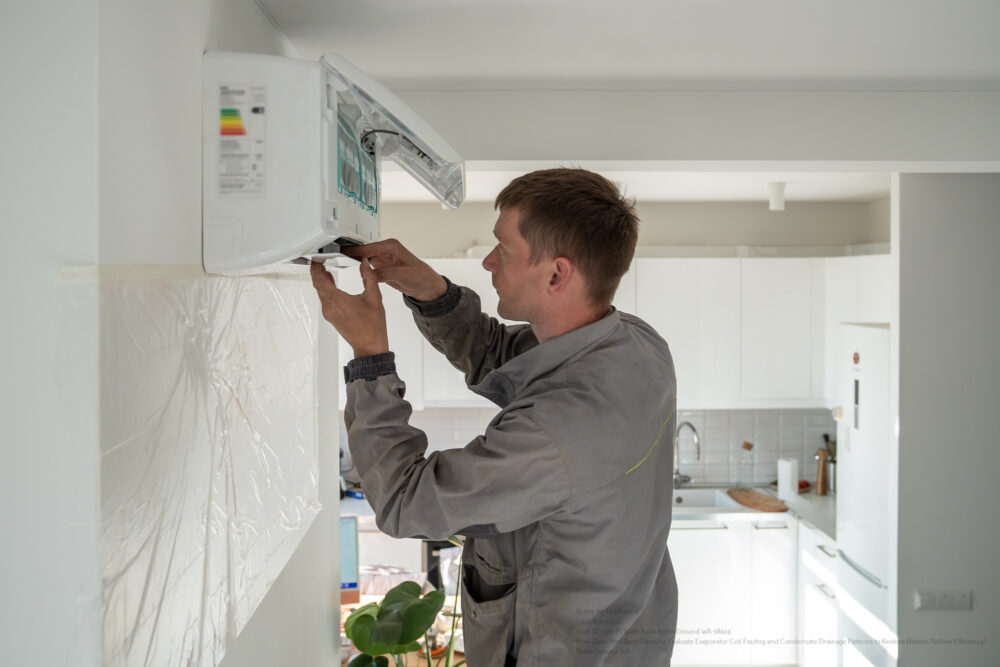
The benefit of professional cleaning is that each component can be considered as part of the same airflow path. When the evaporator coil is heavily fouled, air has a harder time passing across its fins. When the blower wheel carries layers of debris, the fan may struggle to move air effectively. Cleaning those surfaces can therefore support better airflow and more consistent cooling efficiency.
The process can also reveal conditions that cleaning cannot solve. For example, a damaged drain pan, a persistent refrigerant leak, or a failing blower motor requires a different response. The same applies when the outdoor unit is obstructed, or the system has an underlying control problem. Better Air Northwest can help customers determine when mini split cleaning is appropriate and when additional maintenance or repair may be warranted.
This distinction is important for energy consumption, too. Energy Star recommends regular HVAC maintenance and notes that dirty cooling coils can reduce cooling performance and cause equipment to run longer, increasing energy costs.
Need Mini Split Cleaning For Your Home Or Business?
Contact Better Air Northwest today for dependable, professional service.
What Does Mini Split Cleaning in Portland OR Actually Examine?
Effective mini split cleaning in Portland OR isn’t simply a matter of wiping the visible cover. A thorough evaluation considers how the evaporator coil fins, blower wheel, air filters, drain pan and condensate drain work together. If the coil face is coated with dust, heat transfer can suffer, while buildup around the blower wheel can interfere with the volume and direction of air leaving the unit.
Drainage deserves equal attention because cooling naturally produces condensation. A partially restricted drain line may allow water to move slowly or collect where it shouldn’t. In a humid environment, persistent moisture can also create conditions favorable to mold growth. Better Air Northwest can evaluate these visible and functional areas as part of its mini-split cleaning services, helping homeowners distinguish routine buildup from issues that may require a qualified HVAC technician or a separate repair service.
Which Small Problems Can Turn Into Bigger Performance Issues?
Several common mistakes can make ductless equipment work harder than necessary. One is focusing only on air filters while ignoring the deeper indoor assembly. Filters catch incoming particles, but they don’t prevent every particle from reaching the blower wheel or evaporator coil fins over time, particularly when filters are overdue for cleaning.
Another mistake is treating weak airflow as proof that the refrigerant levels are low. Refrigerant leaks and other refrigerant issues can certainly affect system performance, but restricted airflow can produce similar symptoms. Guessing at the cause can lead to unnecessary work when a proper performance check would reveal whether the problem is airflow, coil fouling, drainage, controls or something else.
Drainage is another frequently overlooked area. A dirty drain pan or restricted condensate drain line can cause water to back up, creating moisture problems around the indoor unit. Thermostat issues, electrical connections and outdoor condenser unit conditions also deserve attention when cleaning alone doesn’t explain the symptoms. This is where a systematic approach is more useful than a quick surface cleaning.
Why Portland Homes Can Benefit from Looking Beyond the Filter
A mini-split may run for long periods during both the cooling and heating seasons, particularly when it serves a frequently occupied room. Over time, airborne allergens, dust and household particles can accumulate around the indoor assembly. Homes undergoing remodeling may also expose ductless equipment to unusually high levels of construction dust.
A useful maintenance mindset is to watch for changes rather than waiting for complete failure. Reduced airflow, unusual moisture around the indoor unit, unpleasant odors, inconsistent temperature or rising energy consumption can all justify closer inspection. These symptoms don’t automatically mean the unit needs cleaning, but they are useful signals for arranging a professional performance check.
The same principle applies to the outdoor unit. Leaves, dirt and other debris around the outdoor condenser unit can restrict heat transfer and make the complete system work harder. A clean indoor evaporator coil won’t compensate for every outdoor-side problem, which is why system performance should be viewed as a whole rather than as one isolated component.
Why Better Air Northwest is a Smart Choice for Mini Split Care
We at Better Air Northwest provide the best solutions to our customers by focusing on the actual conditions affecting indoor equipment rather than treating every symptom as the same problem. Our approach to mini split cleaning considers the evaporator coil, blower wheel, drain pan and condensate pathway so customers can better understand what their ductless system needs.
We showcase excellent service by keeping the work focused, practical and relevant to the equipment being cleaned. We also help customers recognize when routine cleaning is appropriate and when another HVAC concern deserves professional attention.
If your ductless unit isn’t moving air as it once did, don’t wait for a small performance change to become a major comfort problem. Contact Better Air Northwest for professional mini split cleaning in the Portland metro area and give your system the attention it needs. For dependable mini split cleaning in Portland OR, Better Air Northwest helps homeowners address hidden airflow and condensate drainage concerns with a practical, system-focused approach.
Need Mini Split Cleaning For Your Home Or Business?
Contact Better Air Northwest today for dependable, professional service.